Most people reach for a skincare product with one job in mind. A serum for the face. A conditioner for the hair. A cuticle cream for the nails. The idea that a single, pure ingredient could handle all four with equal effectiveness feels almost too simple to believe. But sweet almond oil has been doing exactly that for centuries, long before the skincare industry built an entire product category around multi-use formulas. The science behind it is real, the history is rich, and the application is remarkably straightforward.
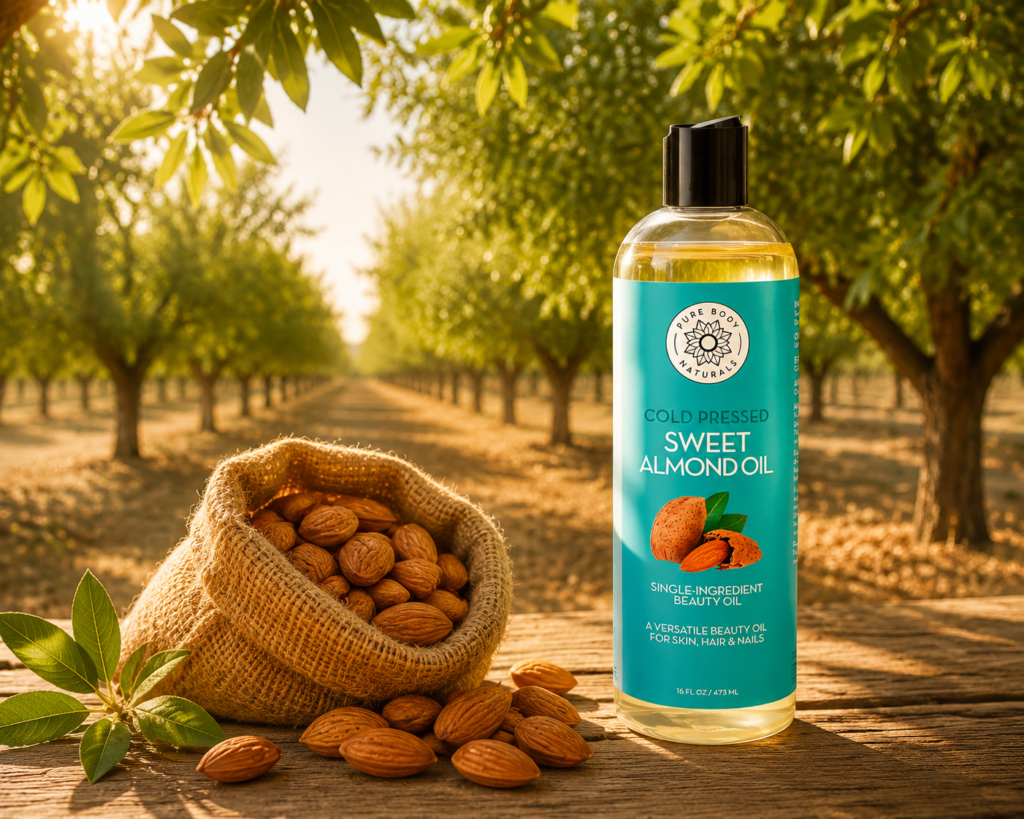
Sweet almond oil is pressed from the dried kernels of the Prunus dulcis tree, a species native to Iran and surrounding regions that has been cultivated across the Mediterranean for thousands of years. Spain and Italy became the dominant producers over time, developing almond-growing traditions that are still recognized for producing some of the highest-quality kernels in the world. What makes the oil remarkable is not just where it comes from but how it is made. Cold pressing keeps the process clean. No heat, no chemical solvents, no hexane — just mechanical pressure applied at temperatures low enough to preserve the full nutritional profile of the kernel. That matters more than most people realize, because heat destroys the very compounds that make this oil worth using in the first place.
I want to be direct about something. There are a lot of oils competing for space in your routine right now. Rosehip, marula, argan, jojoba, squalane — the list is genuinely long. Each has its own chemical profile, its own best use case, its own fans. Sweet almond oil earns its place in that conversation not by being the trendiest option or the most exotic, but by being one of the most versatile and consistently effective single-ingredient oils available. It works on dry skin. It works on oily skin. It works on your scalp, your ends, and your nail beds. That kind of range is not common. It is worth paying attention to.
What Cold-Pressing Actually Preserves
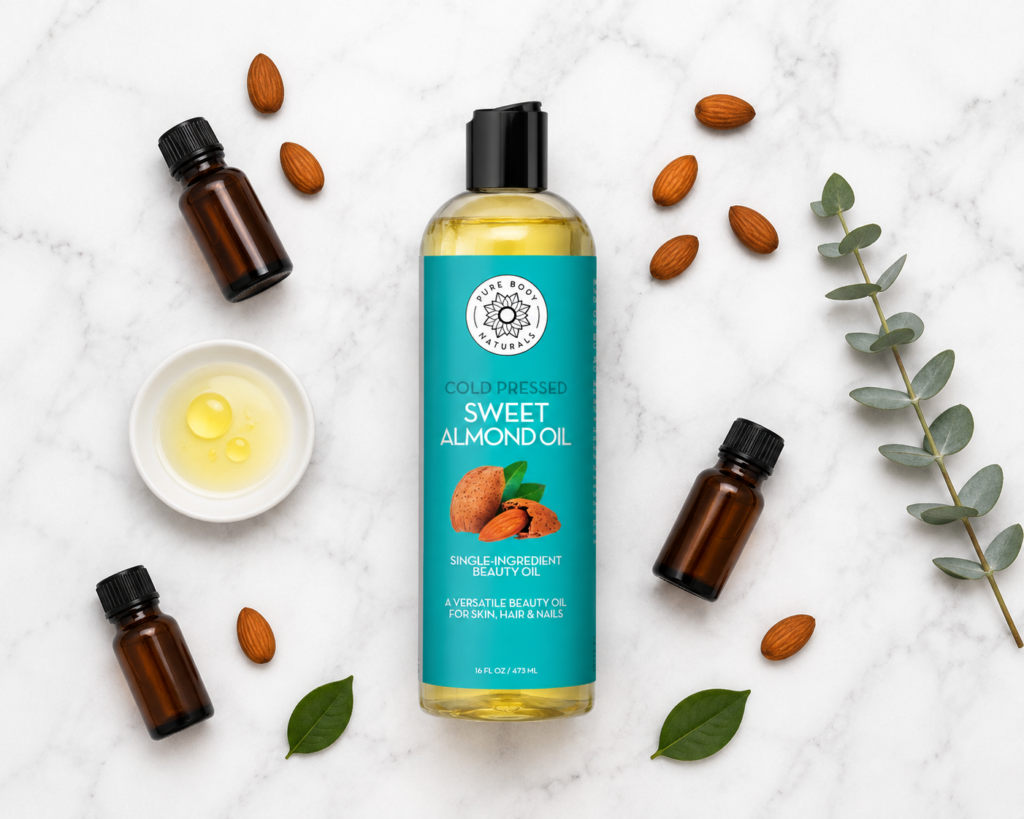
When a kernel is cold-pressed, the oil that comes out carries its full complement of naturally occurring compounds. In sweet almond oil, that means Vitamin E, Vitamin A, B vitamins, oleic acid, linoleic acid, and a mix of essential fatty acids. Each of these plays a distinct role in skin and hair function and understanding them helps explain why the oil performs as well as it does across such different applications.
Vitamin E, or tocopherol, is a fat-soluble antioxidant that helps protect skin cells from oxidative stress while also supporting moisture retention. Research published in the journal Skin Pharmacology and Physiology found that Vitamin E applied topically can help reduce transepidermal water loss — the process by which moisture escapes through the outer skin barrier. That is the mechanism behind why Vitamin E-rich oils tend to leave skin feeling more consistently hydrated over time rather than just temporarily smooth after application. Sweet almond oil is one of the better natural sources of topically delivered Vitamin E, making it particularly useful for anyone with dry or dehydrated skin.
Oleic acid is the dominant fatty acid in sweet almond oil, typically making up somewhere between 62 and 86 percent of its total fatty acid content depending on the source. This is significant because oleic acid has a molecular structure that allows it to penetrate into the outer layers of the skin and hair rather than simply sitting on the surface. That penetrating quality is what distinguishes oils high in oleic acid from heavier occlusive oils that form a physical barrier without absorbing. For the scalp, this means oleic acid can help deliver moisture where the follicle actually needs it. For the ends of the hair, it means real softness rather than a temporary coating that washes out. For facial skin, it means hydration that holds.
Linoleic acid, present in smaller concentrations, plays a different but complementary role. It is an omega-6 fatty acid that supports the integrity of the skin’s lipid barrier. Research has shown that people with acne-prone skin often show reduced levels of linoleic acid in their sebum. When the skin barrier lacks sufficient linoleic acid, it can become more permeable, less able to retain moisture, and more reactive to environmental triggers. Including linoleic acid-containing oils in a skincare routine can help support barrier function over time. Sweet almond oil delivers both oleic and linoleic acid together, which is one reason it tends to suit a broader range of skin types than oils that skew heavily toward one fatty acid class.
The Case for One Ingredient
There is a certain elegance to a product that does not need a twelve-item ingredient list to work. 100 percent Prunus dulcis oil means exactly that: one ingredient. No carrier solvents added to thin it out. No synthetic fragrance layered in to mask an unpleasant scent. No preservatives, because the naturally occurring Vitamin E content in well-pressed almond oil provides its own stability without synthetic additives. This level of simplicity is increasingly rare in a market that defaults to complexity, and it is genuinely valuable for people who are trying to simplify a routine that has grown unwieldy or who have sensitive skin that reacts to multi-ingredient formulas.
The scent is worth discussing here because it tends to be the first thing people notice. Sweet almond oil has a very mild, faintly nutty scent that is subtle enough to be almost imperceptible on the skin after a few minutes. This is a feature rather than a drawback, especially for aromatherapy practitioners and essential oil users who use carrier oils specifically to dilute and deliver their chosen blends. A carrier oil with a strong competing fragrance alters the scent profile of the final blend, sometimes significantly. Almond oil’s neutrality lets lavender smell like lavender, bergamot smell like bergamot, and eucalyptus smell exactly the way you want it to. It does its job invisibly.
The hypoallergenic classification of sweet almond oil is another reason it performs well for sensitive skin types. Its lipid profile is relatively mild compared to more reactive oils, and it is generally well-tolerated by people who struggle with reactions to fragrance, essential oils added to skincare products, or heavier occlusive ingredients. That said, individuals with tree nut allergies should approach any nut-derived oil with appropriate caution and consult a healthcare provider before use, since topical exposure to nut-derived ingredients can, in some cases, be relevant to allergy management.
Four Real Use Cases and How to Apply It
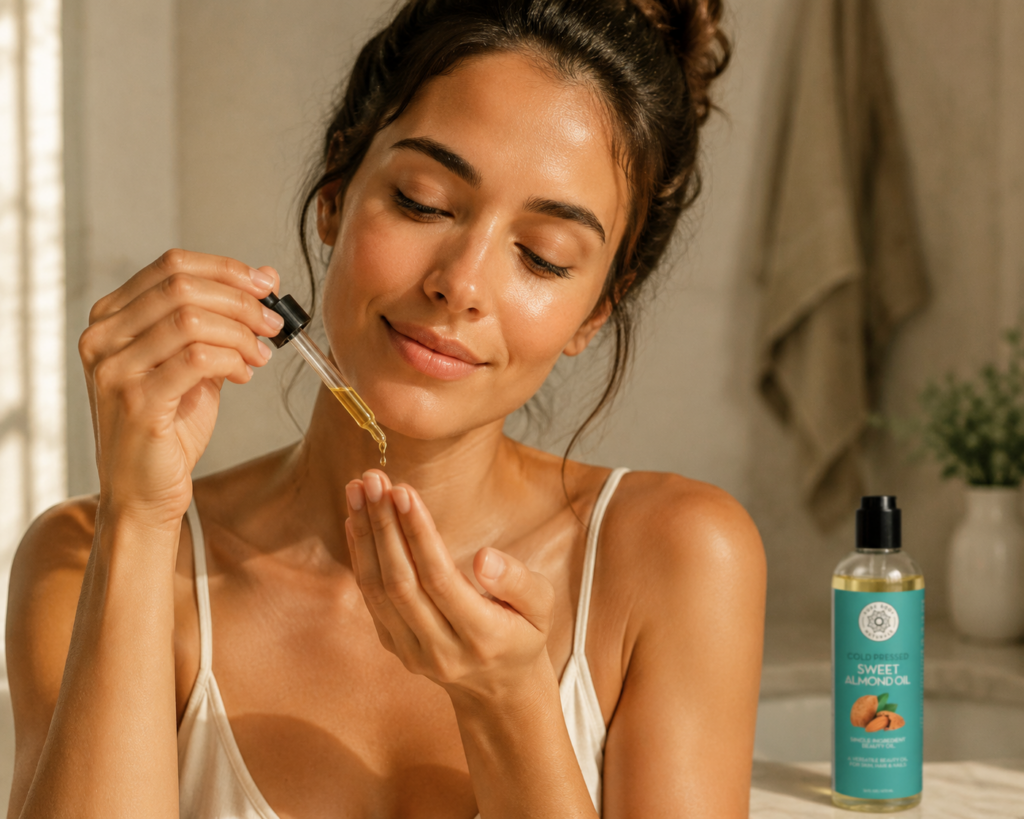
The face application is the one most people find counterintuitive. If you have combination or oily skin, the idea of applying oil to your face might feel like a step in exactly the wrong direction. But sweet almond oil is non-comedogenic, meaning it does not clog pores the way heavier, more occlusive substances can. Its molecular profile allows it to absorb into the skin rather than sitting on top of it. Two to three drops pressed onto clean, slightly damp skin is enough to cover the full face and neck. The dampness matters because it creates a slight barrier that keeps the oil from evaporating too quickly before it has had time to absorb. Applied this way, sweet almond oil leaves skin soft and hydrated without the greasy residue that turns many people off from facial oils.
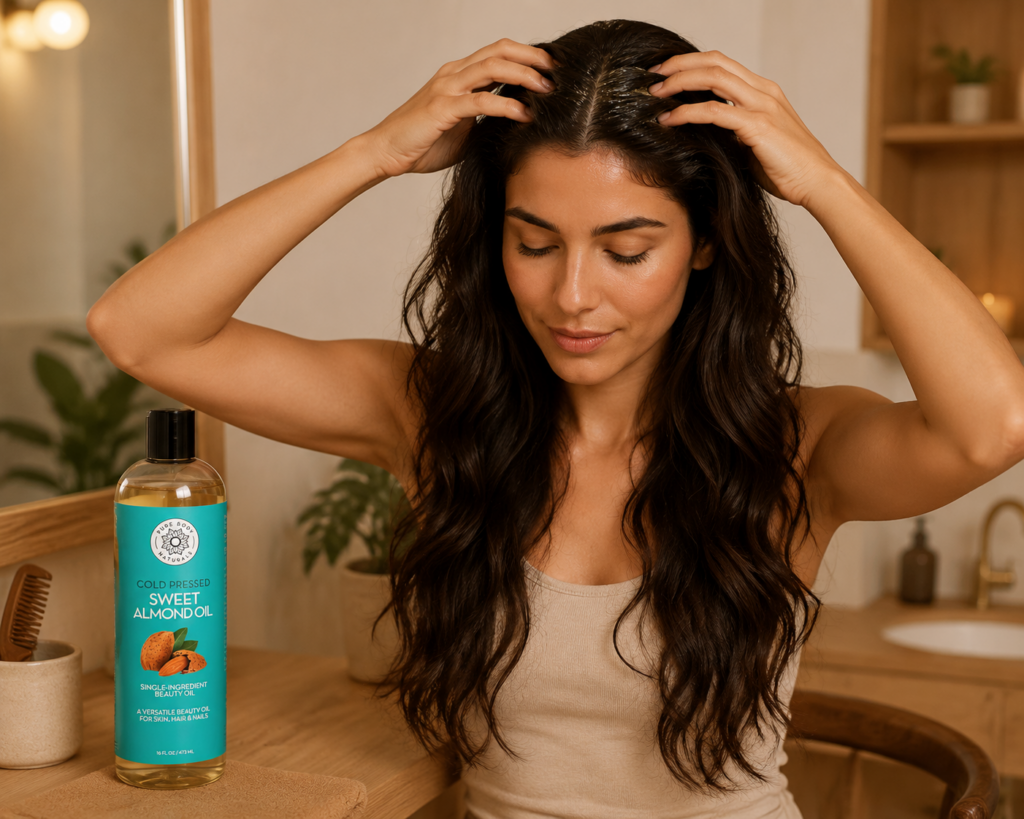
For hair, the approach varies depending on what you are trying to address. For scalp health, a small amount warmed between the palms and massaged directly into the scalp helps deliver moisture to the follicle environment. This works particularly well as part of a pre-wash treatment left on for 30 minutes or more before shampooing. For dry ends and mid-lengths, working a few drops through damp hair after washing serves as a leave-in treatment that reduces frizz, adds shine, and supports the kind of softness that regular heat styling tends to strip out over time. The lightweight texture means it does not weigh hair down or create the greasy look that heavier hair oils can leave behind, making it genuinely usable for fine or low-porosity hair types that typically struggle with oil treatments.
A note on almond oil in hair care: a study published in the Journal of Cosmetic Science found that certain oils high in oleic acid demonstrated reduced protein loss in chemically treated hair when used as a pre-wash treatment compared to untreated controls. While the study examined coconut oil specifically, the mechanism identified — oleic acid’s ability to penetrate the hair shaft and reduce protein degradation — applies meaningfully to other oleic-acid-rich oils including sweet almond oil.
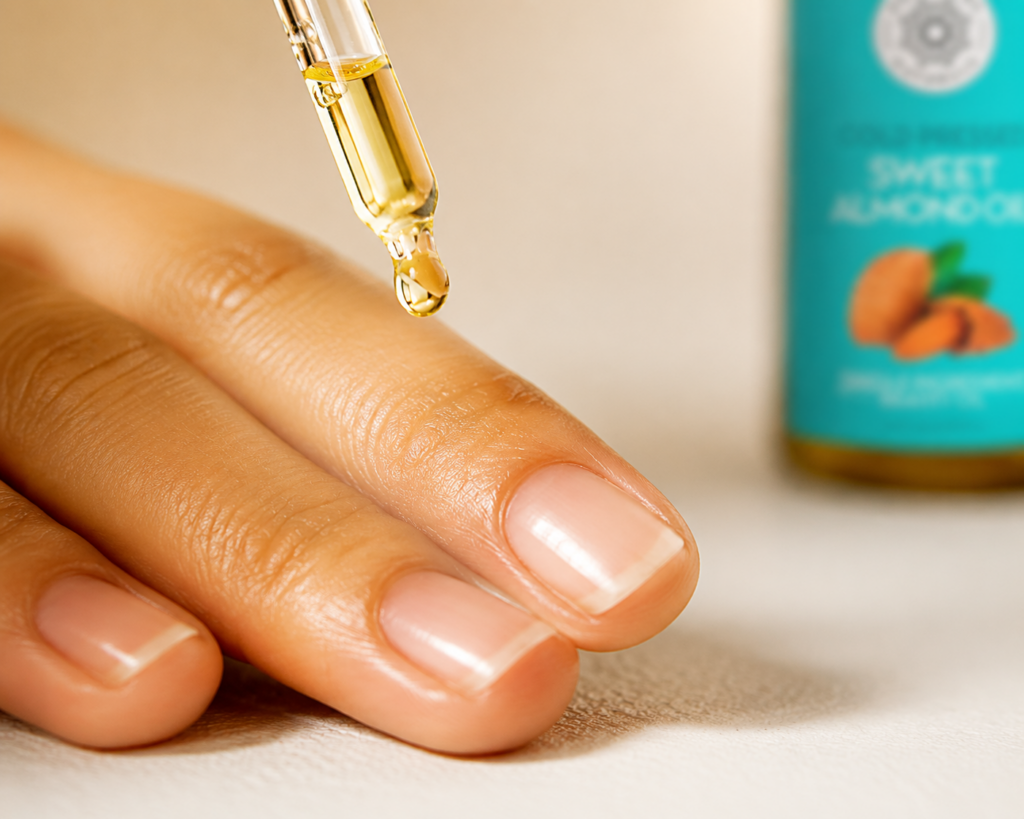
The nail care use is simple and often overlooked. One drop massaged into each cuticle helps address the dryness that makes cuticles split, peel, and look ragged. Consistent use, particularly in dry winter months or after frequent hand washing, supports the soft, intact cuticle appearance that makes nails look healthier even without polish. The Vitamin E content in the oil is especially relevant here, as Vitamin E applied topically to the nail and cuticle area has long been used in professional nail care to support moisture retention and reduce brittleness.
How to Use It as a Carrier Oil
Essential oil blending is an entire practice unto itself, and the carrier oil you choose has a bigger impact on the final product than most people starting out in aromatherapy expect. A carrier oil affects the viscosity of the blend, the rate at which it absorbs, the feel on the skin, and — critically — the scent experience. For therapeutic blends where the fragrance of the essential oil is part of the intended effect, a carrier oil with a neutral scent is essential. Sweet almond oil meets that requirement better than most.
The standard dilution ratio for most topical essential oil blends is between 1 and 3 percent essential oil to carrier oil, depending on the intended use and the potency of the essential oil being diluted. For a basic 2 percent dilution, that works out to approximately 12 drops of essential oil per 30ml (one ounce) of carrier oil. Sweet almond oil’s viscosity makes it easy to measure, blend, and apply, and it is stable enough at room temperature to give blends a reasonable shelf life when stored away from heat and light. For anyone building a home aromatherapy practice or working toward more intentional DIY body care, it makes an excellent baseline carrier.
Why the 16oz Format Changes Everything
There is a practical argument to be made here about bottle size that does not get enough attention. Skincare and body care products almost always assume a single-use context per product. A 30ml facial serum for the face, a small bottle of cuticle oil for the nails, a separate hair oil treatment for the scalp. These products each serve one purpose, and their sizes reflect that. A 16oz bottle of sweet almond oil operates on different logic entirely. Because it covers face, scalp, ends, nails, and carrier blending, a larger format is not wasteful — it is efficient. You are not buying one product in a big bottle. You are buying one ingredient that replaces several products across your entire routine.
The economics follow naturally. A single ingredient, responsibly sized, with a shelf life that holds well when stored correctly, costs considerably less per use than buying multiple single-purpose products that collectively cover the same ground. For people who are serious about clean beauty and simplifying what goes on their skin, that calculation matters. Less packaging. Fewer formulas to vet. One ingredient to trust.
Sourcing and the Cold-Press Standard
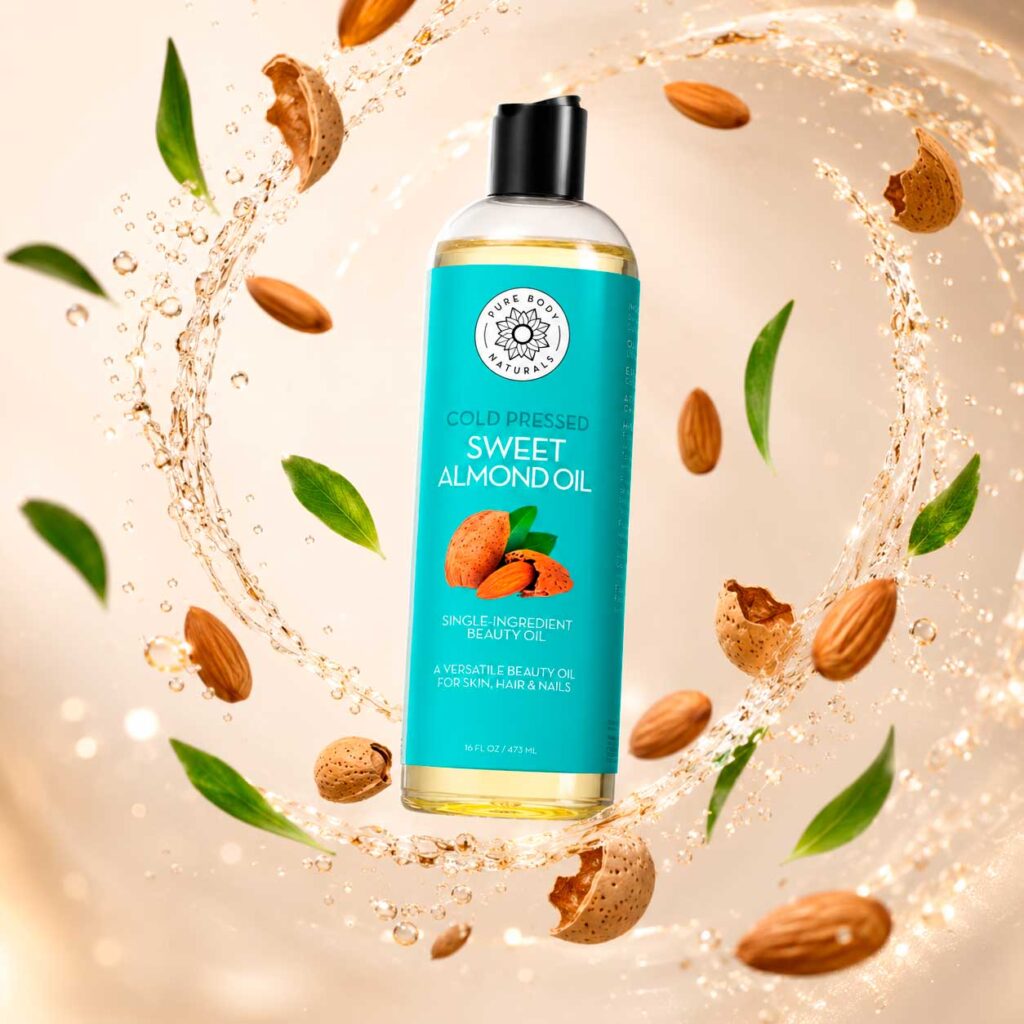
Not all almond oils are created equal. The cold-press distinction is one that gets used loosely in marketing, but it has a specific technical meaning that is worth protecting. Genuine cold-pressed oil is extracted at temperatures that do not exceed a threshold that would degrade the oil’s nutritional compounds — typically around 49°C or below, depending on the source consulted. Above that threshold, heat begins to break down Vitamin E, alter fatty acid structures, and reduce the oil’s overall bioavailability for skin use.
Hexane extraction is the industrial alternative. It is faster, cheaper, and more efficient at extracting oil from the kernel at scale. But hexane is a chemical solvent, and while refining processes are designed to remove it from the final product, the extraction method itself can compromise the oil’s original nutritional profile in ways that cold pressing avoids entirely. The presence or absence of hexane in an oil is rarely disclosed prominently on the label, which is why it matters to choose brands that specify hexane-free processing explicitly. When an oil lists nothing but Prunus dulcis on the ingredient panel and carries a cold-pressed designation from a brand with transparent sourcing practices, that is the clearest signal available that you are getting the real thing.
The quality of the almond harvest itself also plays a role. Spanish almonds have a reputation for producing a particularly fine-textured, mild oil that performs well in both skincare and aromatherapy applications. The climate conditions of almond-growing regions in Spain support a kernel with a lipid profile that lends itself to the lightweight, fast-absorbing character that makes the oil so practical for daily skin use. Sourcing from regions with established almond cultivation standards is not a marketing detail — it is a reflection of the raw material quality that ultimately determines what ends up on your skin.
Making It a Daily Practice
The oils that consistently deliver results are the ones that fit seamlessly into an existing routine without requiring major adjustments or complicated protocols. Sweet almond oil qualifies on every count. Two to three drops on clean facial skin takes less than thirty seconds. A scalp massage before a shower adds maybe five minutes to a wash-day routine. Cuticle care at the end of the day requires a single drop per nail. None of these require a new step so much as they replace something you were already doing, usually with a more complex product that contains a much longer list of ingredients.
That simplicity is the real story here. Skincare does not have to be complicated to be effective. In fact, some of the most consistently reliable ingredients in modern skincare are not new discoveries — they are ancient ones that have been revalidated by current research. Sweet almond oil is one of them. It works because of its chemistry, not because of clever marketing. It is versatile because of its fatty acid profile, not because someone decided to position it that way. And it is trustworthy because it is exactly what it says it is: one ingredient, cold-pressed, with nothing added and nothing removed.
That is a rare thing. And in a category that often over-complicates what could be simple, it is worth recognizing.
