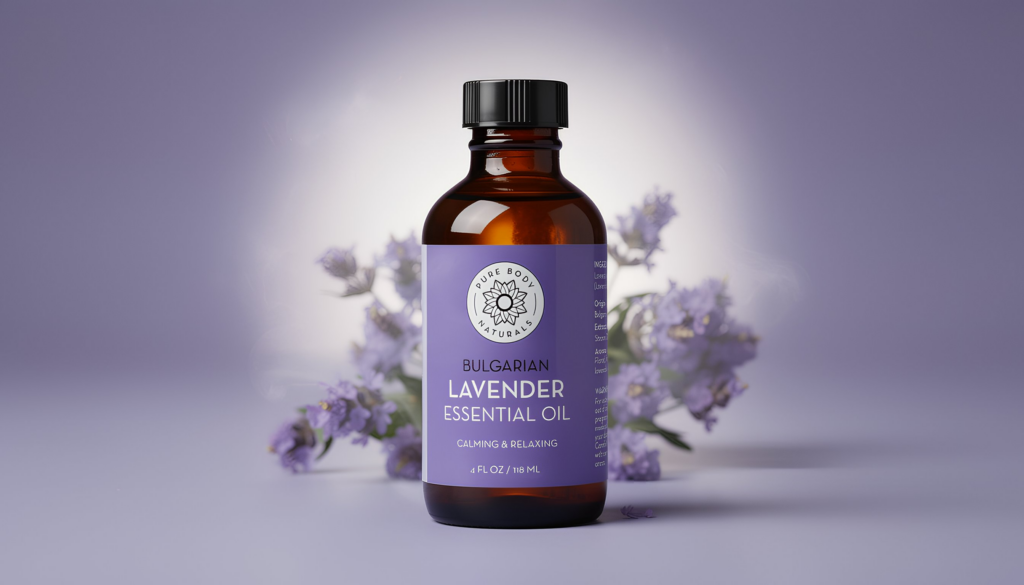
There are more than 40 species of lavender growing across the globe, from the dry hillsides of Provence to the high-altitude fields of Kashmir. But ask any aromatherapist, perfumer, or formulator which lavender they reach for first, and the answer is almost always the same. Bulgarian. Every time. There is something about the lavender that grows in Bulgaria’s Rose Valley – a stretch of land tucked between the Balkan and Sredna Gora mountain ranges – that simply cannot be replicated anywhere else. The altitude, the soil composition, the summer climate, the harvesting traditions passed down through generations – all of it converges to produce an essential oil so chemically rich and aromatically complex that the rest of the lavender world genuinely plays second fiddle.
I want to be specific about why that matters, because this is not just poetic language. The chemistry of Bulgarian lavender oil – particularly its linalool and linalyl acetate content – is measurably superior to lavender grown in most other regions. And that chemical profile is directly linked to the therapeutic and aromatic qualities that make this oil so sought after. It is not hype. It is science.
What Makes Bulgarian Lavender Chemically Exceptional
The two compounds that define lavender oil quality are linalool and linalyl acetate. Linalool is a naturally occurring terpene alcohol found in hundreds of plants, but in lavender it contributes the characteristic calm, floral scent and is closely associated with the oil’s relaxation properties. Linalyl acetate is an ester – a compound formed when an acid reacts with an alcohol – and it gives Bulgarian lavender that distinctly sweet, fruity top note that blenders and perfumers prize. Together, these two compounds typically account for 70 to 85 percent of a high-quality Bulgarian lavender oil’s chemical composition. That percentage matters enormously because it speaks directly to potency, consistency, and effect.
Research published in the journal Molecules found that lavender essential oil with high linalool content demonstrated significant anxiolytic (anxiety-reducing) effects in both animal and human studies, with inhaled linalool specifically shown to influence the central nervous system by modulating GABA-A receptors – the same receptors targeted by many pharmaceutical anti-anxiety medications. That is a meaningful parallel. It explains why diffusing Bulgarian lavender in a bedroom before sleep is not just pleasant ritual – it is biochemically purposeful activity.
Bulgarian lavender also tends to contain lower levels of camphor than lavender varieties grown at lower altitudes. Camphor, while useful in its own right, introduces a sharper, more medicinal note that can overpower the softer floral qualities people associate with lavender at its finest. The high-altitude growing conditions in Bulgaria – fields typically sit between 600 and 1,200 meters above sea level – naturally suppress camphor development and encourage higher concentrations of those desirable esters. The result is a cleaner, rounder, more nuanced oil that performs better in both skincare formulations and aromatherapy applications.
The Geography and Growing Conditions Nobody Talks About Enough
Bulgaria’s Rose Valley has been cultivating aromatic plants for centuries. The region’s reputation for producing exceptional botanical extracts did not happen by accident – it is the product of a very specific combination of geography, climate, and accumulated horticultural expertise. The Balkan Mountains to the north act as a natural windbreak, protecting crops from harsh continental air while the southern-facing slopes capture maximum sunlight during the long summer days. The region receives enough rainfall to support healthy plant growth but not so much that the soil becomes waterlogged and dilutes the essential oil yield. Temperatures are moderate, and the elevation means cooler nights, which slows the plant’s metabolism and allows more time for aromatic compounds to concentrate within the flower heads.
Lavender in Bulgaria is typically harvested by hand during a very narrow window in June and early July, when the flowers are approximately half open. This timing is not arbitrary. Harvesting too early means the linalyl acetate content has not fully developed. Harvesting too late means some of those precious esters have already begun to volatilize and dissipate in the summer heat. Experienced Bulgarian growers have an intuitive feel for this window developed over lifetimes of working the same fields their parents and grandparents tended before them. That knowledge is irreplaceable, and it is embedded in every bottle of properly sourced Bulgarian lavender oil.
The distillation process matters just as much as the harvest. Traditional steam distillation at controlled low pressure preserves the integrity of the volatile compounds that give Bulgarian lavender its character. Rush the distillation or use excessive heat to increase yield, and you degrade the linalyl acetate content – which means the oil smells flat, lacks that hallmark fruity sweetness, and delivers far less therapeutic value. Quality Bulgarian lavender oil is never rushed. The distillation is slow, deliberate, and precise.
How Bulgarian Lavender Oil Performs on Skin
This is where things get particularly interesting for anyone building a skincare routine or formulating natural products. Bulgarian lavender essential oil is one of the very few essential oils considered generally safe for topical use when properly diluted – most essential oils require significant caution on skin due to irritation potential, but lavender has an unusually gentle profile. That gentleness is partly structural: linalool and linalyl acetate are relatively non-sensitizing compared to the phenols and aldehydes found in stronger essential oils like cinnamon bark or clove.
When blended into a carrier oil – jojoba, rosehip, sweet almond – Bulgarian lavender adds measurable skin-supportive properties alongside its aromatic contribution. Lavender oil has well-documented antimicrobial properties, which is why it has been used historically on wounds and burns. More relevant for modern skincare, its anti-inflammatory compounds help calm reactive skin, reduce redness, and support the skin barrier function. For people dealing with occasional breakouts, the antibacterial activity of linalool means lavender-infused formulations can address surface bacteria without the drying, stripping effect of harsher actives.
The calming effect extends to the skin’s visible state. Redness, irritation, and sensitivity often have an inflammatory component – and Bulgarian lavender’s ester-rich chemistry actively works against that. Adding even a small amount of Bulgarian lavender oil to a facial serum or body oil introduces a layer of anti-inflammatory activity that complements almost any other active ingredient in the formula. It plays well with others. That compatibility is one of the reasons it appears so frequently as a supporting ingredient in professional formulations across skincare, hair care, and wellness products.
Aromatherapy and the Nervous System
The connection between Bulgarian lavender oil and stress relief is probably the thing most people already know about this oil. But most people do not know the specific mechanism behind it, and that mechanism is worth taking a moment to examine. When you inhale lavender’s aromatic compounds, those molecules travel through the olfactory epithelium – the sensory tissue at the top of the nasal cavity – and signal directly to the limbic system, the part of the brain responsible for emotion, memory, and physiological stress responses. Linalool, specifically, has been shown to reduce stress markers in the body without causing sedation at typical aromatherapy concentrations. You feel calmer, not drugged.
This distinction matters for practical use. Diffusing Bulgarian lavender oil in the evening does not knock you out – it creates conditions that make relaxation easier and more natural. Heart rate slows slightly. Cortisol levels drop. Breathing deepens. The body moves more readily into a parasympathetic state, which is the physiological condition required for quality sleep and cellular repair. A 2020 study published in the International Journal of Environmental Research and Public Health found that lavender aromatherapy interventions significantly reduced anxiety scores in clinical populations compared to control groups. The magnitude of effect was meaningful enough that researchers noted it as a viable complementary intervention alongside standard care.
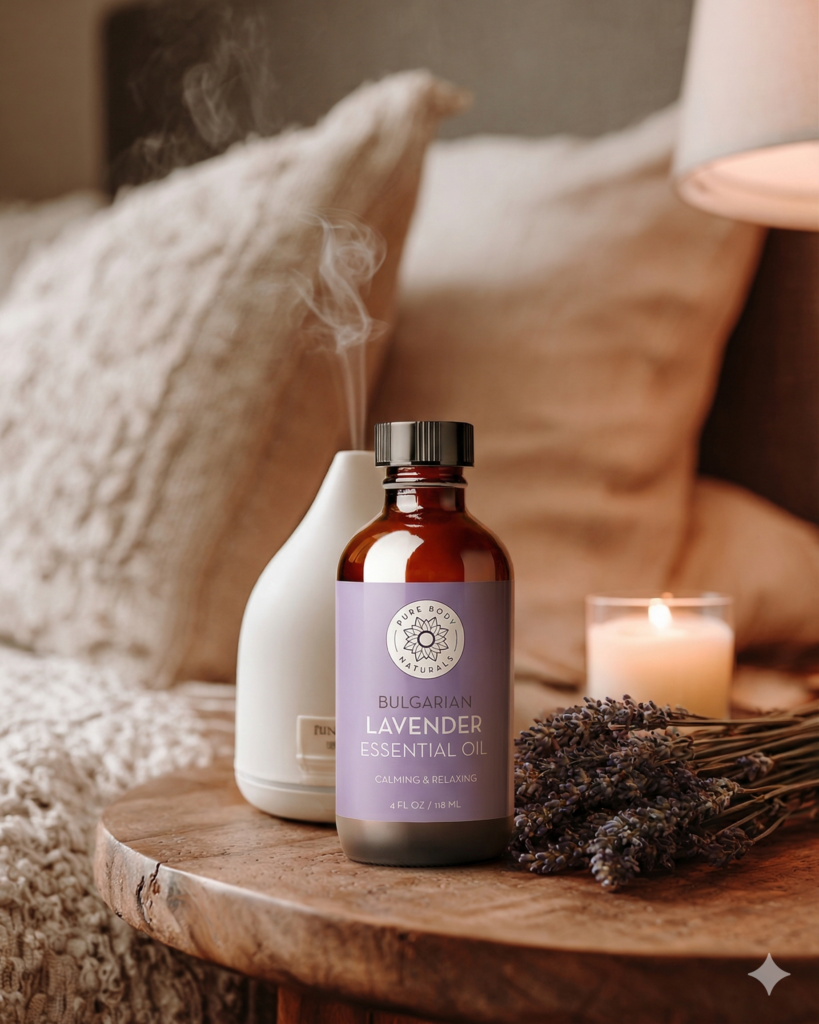
For people who struggle with winding down after demanding days, that kind of consistent, gentle physiological nudge is genuinely valuable. Bulgarian lavender oil, diffused at a moderate concentration for 30 to 60 minutes before sleep, creates a sensory environment that signals the nervous system to shift gears. The ritual itself has value too – the act of intentionally preparing a calming atmosphere is a form of self-care that reinforces healthier sleep behavior over time.
Using Bulgarian Lavender Oil at Home
Getting the most out of Bulgarian lavender oil at home requires a few practical considerations. First, dilution. Applied directly to skin without a carrier, even a gentle oil like lavender can cause sensitivity with repeated use. A standard dilution of 1 to 2 percent in a carrier oil – roughly 6 to 12 drops per ounce – is appropriate for most adults for facial or body application. For a more targeted approach on temples or wrists, some people use a slightly higher concentration, but starting conservative is always the right call with any essential oil on skin.
In the diffuser, Bulgarian lavender is remarkably versatile as both a standalone oil and a blending partner. It pairs beautifully with cedarwood, which deepens the earthy base note and adds a grounding quality especially suited to evening routines. It works equally well with citrus oils – bergamot in particular – which brighten the floral profile for a more uplifting daytime blend. Roman chamomile, frankincense, and clary sage are all natural partners that amplify lavender’s calming character without competing with it. For a simple, effective evening diffuser blend, four drops of Bulgarian lavender with two drops of cedarwood and one drop of frankincense creates a warm, rich atmosphere that is genuinely conducive to winding down.
For hair and scalp applications, diluting Bulgarian lavender in a lightweight carrier oil and massaging it into the scalp before washing is a practice with a long history of use. The antimicrobial and anti-inflammatory properties make it a natural fit for supporting scalp health, and the aromatic experience turns a routine shower into something noticeably more restorative. Adding a few drops to an unscented shampoo or conditioner achieves a similar effect with even less effort.
Why Sourcing and Quality Still Matter
With an oil as popular as Bulgarian lavender, the market is predictably flooded with products of wildly varying quality. Some oils labeled “Bulgarian lavender” are blended with synthetic linalool to boost the chemical profile artificially. Others are harvested at the wrong time or distilled aggressively to maximize volume at the expense of quality. The difference between a properly sourced, full-spectrum Bulgarian lavender oil and a synthetic or adulterated version is immediately apparent in the scent – the real thing has a complexity and depth that flat synthetic approximations simply cannot replicate.
When evaluating any Bulgarian lavender oil, the scent is your first guide. A high-quality oil should be rich and multi-layered, opening with that sweet, fruity linalyl acetate top note before settling into a deeper, slightly herbaceous, floral body. If the oil smells harsh, one-dimensional, or aggressively sharp, those are signals worth heeding. Reputable producers will also be transparent about their sourcing region, harvest season, and distillation method. That transparency is not just good marketing – it is a reliable indicator that the producer understands what makes their product valuable and is not cutting corners.
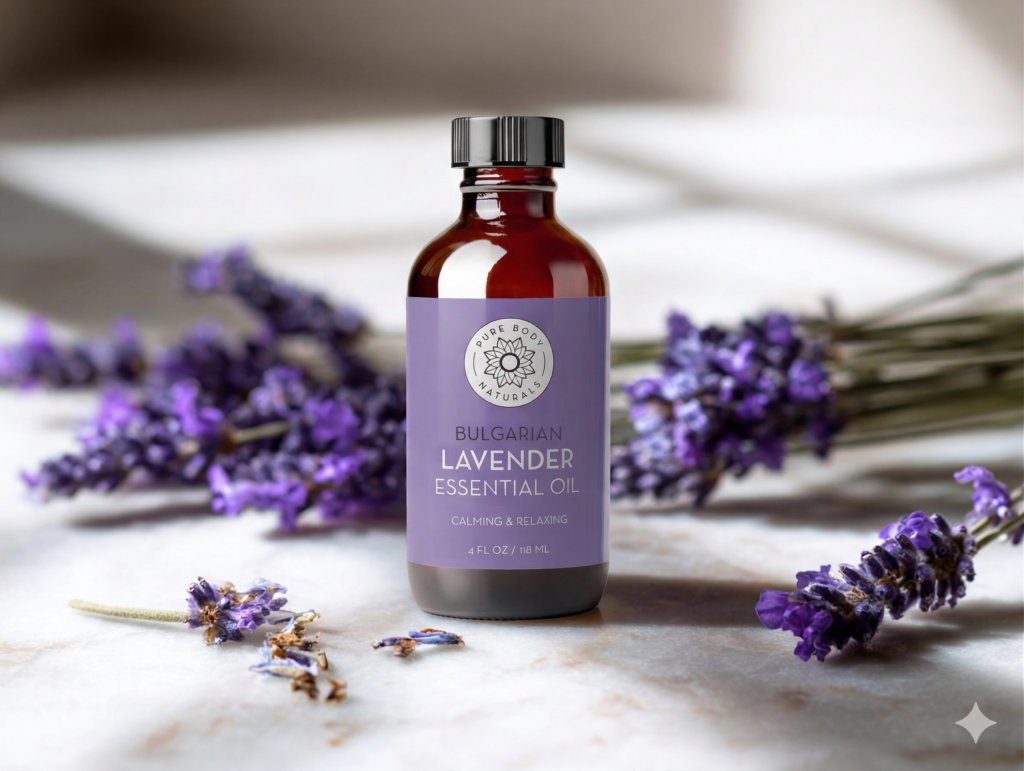
Pure Body Naturals Bulgarian Lavender Essential Oil is distilled specifically from Bulgarian lavender plants, capturing that distinctive rich, fruity, floral aroma with genuine herbal depth. The high linalool and linalyl acetate content delivers the relaxation and skin-friendly performance that serious users expect from a premium Bulgarian source. It is the kind of oil that earns its place as a permanent fixture in the routine – not a novelty, but a genuine workhorse with real results behind it.
The lavender fields of Bulgaria have been producing exceptional essential oil for over a century. The tradition, the terrain, and the chemistry all point in the same direction. When you want lavender that actually performs – on skin, in the diffuser, and in your daily wellness ritual – Bulgarian is where the conversation starts, and for most people, where it ends.
FAQS
Q: What makes Bulgarian lavender oil different from regular lavender oil? A: Bulgarian lavender oil is grown at high altitude in Bulgaria’s Rose Valley, which naturally produces higher concentrations of linalool and linalyl acetate — the two compounds responsible for its signature sweet, fruity-floral scent and relaxation properties. Most lavender oils from lower-altitude regions contain more camphor, which introduces a sharper, more medicinal character. Bulgarian lavender is rounder, richer, and more aromatically complex.
Q: Can Bulgarian lavender oil be applied directly to skin? A: It should always be diluted in a carrier oil before skin application. A ratio of 1 to 2 percent dilution — roughly 6 to 12 drops per ounce of carrier oil — is appropriate for most adults. Lavender is one of the gentler essential oils available, but repeated undiluted use on skin can cause sensitivity over time. When properly diluted, it is suitable for facial and body use.
Q: How do I use Bulgarian lavender oil for better sleep? A: Diffuse 4 to 6 drops in a bedroom diffuser for 30 to 60 minutes before sleep. The aromatic compounds, particularly linalool, interact with the nervous system to encourage a calmer, more relaxed physiological state without causing sedation. You can also apply a diluted blend to pulse points on the wrists or the back of the neck as part of a pre-sleep routine.
Q: What carrier oils work best with Bulgarian lavender oil? A: Jojoba, sweet almond, and rosehip seed oil are all excellent partners. Jojoba is especially versatile because its light texture and long shelf life make it ideal for both facial and body blends. For a nighttime facial oil, combining Bulgarian lavender with rosehip seed oil creates a calming, skin-supportive blend well suited to evening routines.
Q: How can I tell if a Bulgarian lavender oil is high quality? A: The scent is your clearest indicator. A genuine, high-quality Bulgarian lavender oil opens with a sweet, fruity top note from its linalyl acetate content, then settles into a rich, floral-herbal body. If the oil smells flat, one-dimensional, or aggressively sharp, it has likely been adulterated or distilled aggressively to maximize volume at the expense of quality. Reputable products will be transparent about their sourcing region and distillation method.
